Showing posts with label Iloilo City. Show all posts

Monday, May 11, 2015

Homeless Families Seek New start at Balay Kawayan (Bamboo House)


By ROMA R. GONZALES
cross-posted from http://panaynewsphilippines.com/2015/05/07/homeless-families-seek-new-start-at-balay-kawayan/ published in Panay News on May 7, 2015 (Panay News is a leading local newspaper in Iloilo City).
Photos found herein are courtesy of Base Builds https://www.facebook.com/basebuilds?fref=ts and HPFPI http://www.hpfpi.org/


ILOILO City – Twenty bamboo houses were turned over to homeless family beneficiaries at Uswag Subdivision, a city government resettlement site for informal settlers, in Barangay San Isidro, Jaro district.
Beneficiaries were those affected by road-widening projects or those who received court ejection orders. They were screened by the Homeless People’s Federation Philippines, Inc. (HPFPI) in cooperation with the Iloilo City Urban Poor Affairs Office (ICUPAO).
With bamboo as the main structural material clad in concrete, “the houses were engineered to withstand intensity 8 earthquake and winds up to 220 kilometer per hour,” said Base Bahay, Inc. operations manager Jose Angelito Alburo, citing studies.
The two-storey duplexes were made possible through Iloilo Reference Project’s Balay Kawayan Housing Initiative funded by Hilti Foundation and implemented by HPFPI in partnership with Base Bahay, Inc., Technical Assistance for People and Environment, Inc., Philippine Action for Community-led Shelter Initiatives, Inc. and the city government of Iloilo.

One of those who will start a new, decent and comfortable life in these houses built using innovative bamboo technology is Joelito Torres.
During the turnover early this week, Torres was thankful to the city government and partners for giving him and his family a fresh start.
Torres has been a resident of Barangay Ungka, Jaro for the past 25 years. His house was demolished to give way to a road-widening project.
“This bamboo technology was studied in the laboratory. The engineering done to the houses was in such a way na magiging resilient siya at hindi basta-basta masisira ng typhoon,” said Alburo.
Alburo claimed that three houses built with the same technology in Bicol remained standing when typhoon “Glenda” struck while nearby coconut trees were felled.
He also said using bamboo is more sustainable than wood because felling trees causes deforestation.
Bamboo is also a lot cheaper than using steel thrusts, Alburo added.
Measuring about 25 square meters per storey per unit, each house costs P350,000.
Furthermore, the project promotes the use of bamboo as a major structural matter for housing constructions.
Regan Schegg, strategic developer from Hilti Foundation, said they developed the “low-cost, affordable housing technology for those in need” three years ago.
“Ultimately, it is not about the house. It is about the community standing up together,” Schegg said.
Raoul Imbach from the Swiss Embassy said the “Balay Kawayan” technology can be replicated.
The Swiss government is active in Western Visayas helping those stricken by super typhoon “Yolanda” and implementing the Joint Migration and Development Initiative, which encourages overseas returnees to invest in risk reduction and give their knowledge to help the community.


Mayor Jed Patrick Mabilog said the city government will provide additional two hectares to the project implementers and developers to build more homes for those in need./PN

Sunday, April 15, 2012

What We Did And Will Continue To Do

         The Philippine Alliance stands on its principle- that the development process appropriate for the poor should primarily be determined by the poor themselves. Determining such process is more than just applying an academically framed paradigm; it’s more than just having strong partnership with contemporaneous government administration and more than just delivering tangible output as proof of improvement. The alliance looks beyond what is visible- it specifically gives high regard to the people-centered process taking full consideration of the social context and the communities’ pace. Such is evident in all its slum-upgrading initiatives ranging from community savings mobilization, community survey, small-scale upgrading initiatives and at present, its community-managed housing initiatives which has not only made a great impact but has inspired local and international communities.
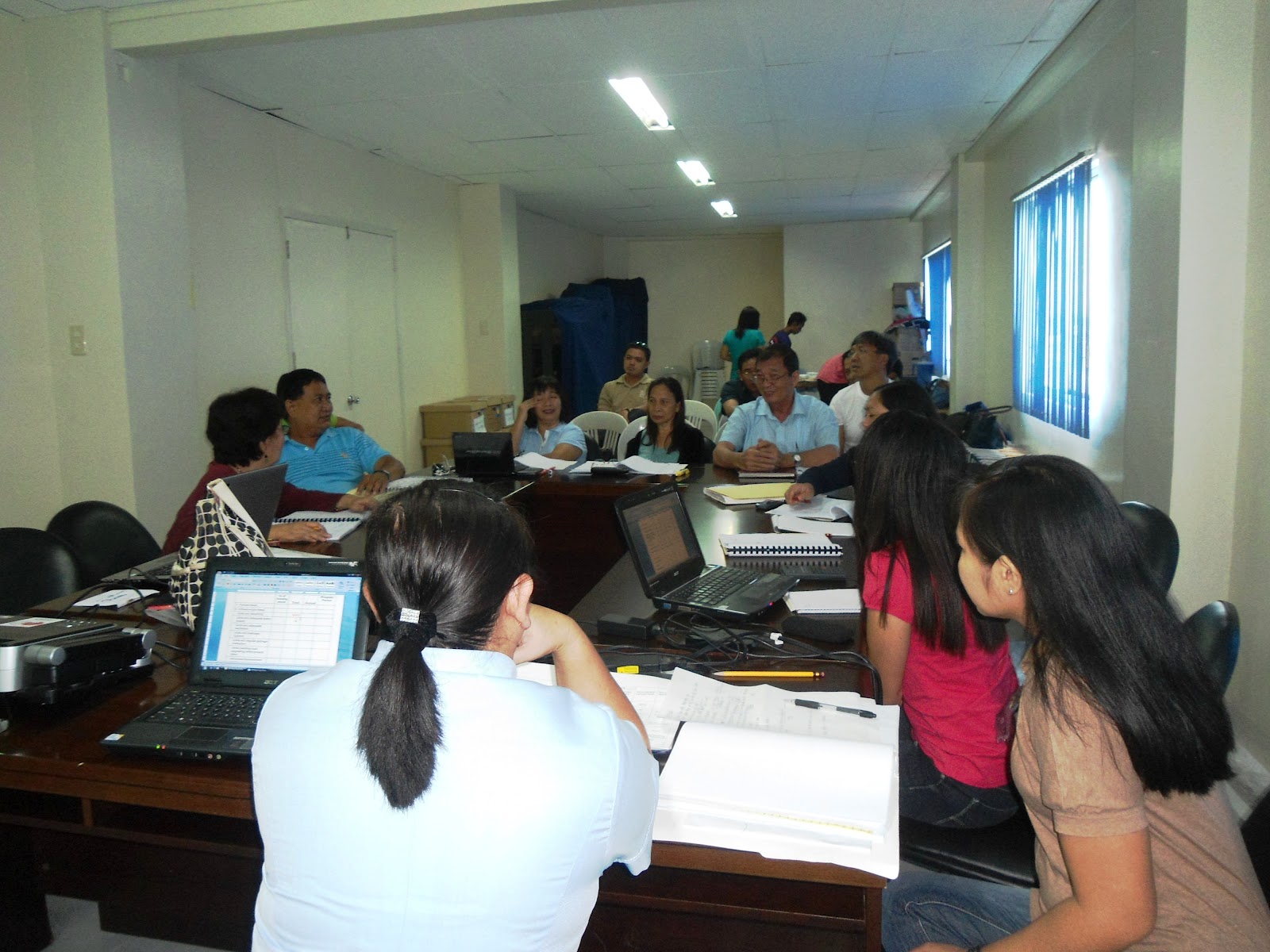
Sonia Cadornigara, HPFPI Regional Coordinator for Western Visayas presents 
the federation's experiences in housing project implementation with Vice Mayor
 Javier of the Municipality of Hamtic and Engr. Mondejar, the appointed project
 engineer of the upcoming project. Observing at the back are TAMPEI's (fr.L-R) 
Arch. Mandario, Rubinos-architect intern, Arch.Libutaque, TAMPEI President
 and Villarin, HPFPI Survey in-charge for Iloilo City

         Just recently, the alliance was tapped by the province of Antique, a province adjacent to the southern part of Iloilo, particularly of the municipality of Hamtic to assist and facilitate in the setting up of a Comprehensive Housing and Upgrading Project for families in the foreshore areas of Malandog, one of the coastal barangays of Hamtic. The project aims to a) promote community-managed housing construction, where the community plays a vital role in planning, procurement, actual construction and housing management; b) build on community’s collective capacities and resources through the promotion and expansion of savings program; c) facilitate skills and technology transfer by replicating the use of ICEB technology for the implementation of low-cost housing project and d) develop and strengthen pool of technical support, networks and partners to leverage financial, technical and infrastructure resources and jointly formulate policies or programs that support the delivery of  adequate, low-cost and sustainable housing for the poor.
Photo taken during the Workshop on Local Shelter Plan Formulation.
Participants compose of representatives from LGU' City Planning and
Development Office, Iloilo City Urban Poor Network, Housing and Urban
Development Coordinating Council, Housing land Use and Regulatory
 Board and National Housing Authority.

           On the other hand, in Iloilo City, the Alliance’s recently promulgated membership and representation in the Local Committee against Squatting Syndicates and Professional Squatters, reaffirmation of its membership in the Local Housing Board, participation in the consultation meeting on the Comprehensive Land Use Plan of Iloilo City, its involvement in the formulation of the Local Shelter Plan for the same and its recent participation in the proposal to amend the a national legislation on Urban Development and Housing are tangible  proofs that its constant and persistent initiative has not only made its presence undoubtedly visible but has to a great extent amplified its voice, loud enough not only to influence development policies but more importantly in taking the lead on setting the compass towards a more inclusive and participatory governance.
Lay-out and flooring of  the housing units of the
3rd batch of housing participants

         Currently, the alliance is nearing completion of one hundred seventy two (172) housing units in its community-managed housing project in San Isidro Relocation Site in Iloilo City. Eighty three (83) of which were officially awarded to first and the second batch of housing participants while the construction of the 48 units for the third batch is still ongoing. The initial course of implementing the remaining forty one (41) units for the last batch of housing participants which considerably has the least affordability level will commence through Savings Orientation and Housing Design Workshop on Monday (April 16, 2012).
Housing units of the 2nd batch of housing
participants. Because of a relatively lower capital
fund of  110,000 pesos compared with the
150,000 pesos fund of the 1st batch they have
decided to use ordinary GI sheets.

           The past few weeks have been quiet challenging and remarkably eventful for the Philippine Alliance particularly for the Iloilo Team, as exemplified by the abovementioned undertakings and activities. Such unfolding of events shows the Alliance’s potential to take greater leaps forward. However, “it is frustrating to know, see and encounter people who still think that they can just draw, plan, dictate, and build the house of the poor without getting them involved”, said Sonia Cadornigara, SDI Board Member. “We must keep in mind that we are not just building their houses but we are in a way building their lives and homes...and it is next to building communities...strategies which are in keeping with their progressive pace should be observed", she added.

Monday, November 21, 2011

Knowing What They Have and Expressing What They Want


Marivic Mirasol, one of the housing participants from San Isidro
Housing Project, facilitates the social mapping activity
ILOILO CITY- Social preparatory activities such as Social Mapping and Dream House Workshop are among the capacity building activities supported by the Philippine Alliance to foster and promote community-led processes among partner communities in the country as a whole. New Baldoza Homeowners’ Association (NBHOA), one of the new community associations qualified to avail of the community-managed housing project implemented by the Philippine Alliance through the Community-led Infrastructure Finance Facility Program actively participated in the back to back training workshop facilitated by housing participants from Kabalaka and San Isidro housing project. The activity which was held last November 20, 2011 in Barangay Baldoza, Lapaz, Iloilo City, was attended by twenty (23) out of the twenty seven (27) applicants.
Members of the New Baldoza Homeowners' Association
enthusiastically post the icons reflective of their socio-economic
and demographic status
Social mapping during the morning session was conducted to map-out the socio-economic profile of the association members who are entitled to avail of a maximum loanable amount of one hundred fifty thousand pesos (P150, 000.00) and will serve as supplementary basis in validating the information given by the participants during their application and reconsideration of the loan package on the part of HPFPI-PACSII in Iloilo. The table below shows the consolidated output of the social mapping:


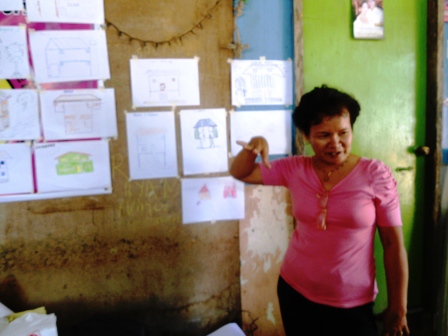
Dream house workshop on the other hand provides a venue for each participant to express their dream house through participative and illustrative schematic design making. Individual designs are then consolidated to integrate common spaces and essential design attributes by community architects and interns from the TAMPEI though three dimensional (3D) design models and prototypes. The following photos exemplify participants dream houses:


Despite budget limitation, particularly on the capital fund for the construction materials as well as the participants expressed preference on replicating the house designs in San Isidro Relocation Site in Jaro instead, the Alliance considers it imperative to conduct separate dream house workshop for New Baldoza as it would facilitate social acceptability and pave the way in building a sense of ownership among association members. As a response and in consideration of the people’s inherent adaptive capacity, the alliance encourages incremental development as a strategy to bridge the gap resulting from the aforementioned budget limitation.    

The pictures below were taken during the presentation of the participants dream houses partcipants as they explain the reasons why they dream of such kind of houses:


For the past years, since the beginning of its housing initiatives in 2007, the Philippine Alliance has been consistent on its stand that social preparatory activities such as social mapping and dream house workshop are fundamental components of a cohesive and responsive community development undertaking. Building capacities among housing participants is likewise a leap forward towards a holistic community-led process.

Sunday, April 17, 2011

TAMPEI Organized Site Development Workshop for RVHOA Members

ILOILO CITY (April 17, 2011)A Site Development workshop on open space planning was organized by the Technical Assistance Movement for People and Environment, Inc. (TAMPEI) for the members of Riverview Homeowners’ Association (RVHOA) in San Isidro Relocation Site in Jaro, Iloilo City. The main reasons for organizing the aforementioned workshop were as follows:
Old Subdivision Plan of RVHOA
Proposed Subdivision Plan for RVHOA
  • Recommendations based on the monitoring and assessment of external evaluators suggest to review and revise the site development plan which shows that the area allocation for the open space intended for the construction of their amenities, was greatly prioritized rather than the area for the Category A housing participants which is the lowest income group among the three (3) income groups which was categorized by the federation 
  • Findings on land survey and evaluation by the federation’s technical assistants show the irregularity of lot sizes and shape as well as unleveled terrain which needs land filling. Land filling of the area would be an additional burden and expense for the housing participants considering their very limited loan for construction materials which only amounts to seventy thousand pesos (P70, 000. 00).
  • Formulation and drafting of the plan only involved the first batch of participants which became a limiting factor in developing a more comprehensive and inclusive plan which is generally favorable and beneficial.
  • The awarding of house units and actual transfer of the first batch of housing participants in CLIFF San Isidro Relocation Site raised concerns on the matters pertaining to the utilization of the open space and identification of amenities to be put up in the area.  
The workshop was divided into four (4) different parts namely:

Ø  Rationalization- considering the reasons stated above, the main goal for organizing the workshop is to make the housing participants and HOA members realize the need to revise the original subdivision plan and thus actively involve themselves to act on the proposed change. Community architects and interns facilitated the discussion and presentation of the original plan vis-à-vis the proposed open space location highlighting the comparative advantages and disadvantages of the two.

Ø  Visualization- to prompt RVHOA members to initially think about their priority facilities to be put up in the open space area given the size and the location, familiarization of the boundaries of the proposed site as well as mapping out of existing adjacent structures  are very important. With the assistance of the community architects and interns, boundaries of the proposed open space location were marked out and participants walked around the defined boundaries to have a clearer picture of the area.

Ø  Identification and Prioritization of Space Use or Facilities- to have a more diverse and comprehensive decision in terms of prioritizing facilities and consideration of its space use, participants were grouped based on various interest groups namely: men, women and youth. Each interest group were tasked to list down the facilities they want, rank it according to their priority and present it with the big group to discuss the reasons for choosing such amenities. After which, the ideas of the three (3) interest groups about their priority amenities were consolidated.

Ø  Planning- after the consolidation of the various group’s priority amenities, identification of the area in which to put up the identified priority facilities was done as part of the planning for the finalization of the site development plan for RVHOA’s open space. Participants used scaled grids and cut outs in illustrating their desired amenities and posted it on an enlarged map to show where they want to place them.

The following are insights which were shared by the housing participants during the workshop:

v  “Revising the subdivision plan of the RVHOA as a whole is timely and appropriate especially now that our members started to transfer here in the relocation site and occupy their new houses. We are continuously growing in terms of our population in CLIFF San Isidro Site which I think should entail better planning of our open spaces and its usage”, says Joel Sicat, RHOA President during the expectation setting and impression sharing part of the workshop.

v  Basketball Court, botanical garden, community mini-market, Material Recovery Facility (MRF), chapel, community hall and playground are among the amenities or facilities which were mainly considered by the participants. These are the things which the participants deemed necessary and are reflective of men, women and youth’s priority. The basketball court according to them can serve as a multi-purpose area for the community’s various activities. The botanical garden and the mini-market were primarily suggested by the group of women participants who consider it essential to have a source of herbal medicine and accessible market. While the youth particularly those age ranges from three (3) to eight (8) years old expressed their suggestion of a playground to be included as one of the amenities in the open space through their drawings.

The aforementioned activity is part of the organizational development workshop being conducted and organized for Philippine Alliance’s community members and partners. Such undertaking shows that in decision making, despite the fact that the alliance adheres toward ensuring that the community is in charge of determining the solutions for their problems as well as in recognizing the things which are beneficial for them, final decisions are always made in consideration with the recommendations of the federation’s community architects and engineers who have the technical skills, formal training and substantial background on the subject matter. This is a concrete manifestation of the importance of technical support institution like TAMPEI particularly in the slum upgrading initiatives of an urban poor federation like HPFPI.