
Tuesday, July 1, 2014


BAMBOO: Redefined.
With partnership and community process, the federation has once again redefined urban poor housing using alternative construction technologies: Treated/Engineered BAMBOO and Interlocking Compressed Earth Blocks (ICEB)


Through the United Nations Economic and Social Commission for Asia and the Pacific (UN-ESCAP) the Homeless People's Federation has forged a partnership with the Hilti Foundation whose advocacy and commitment for the promotion and use of alternative and sustainable building technologies is equally strong with that of the federation.

The recognition by the federation about the potential of bamboo as an affordable and sustainable alternative building technology has began ever since its initial project implementation of its community-managed housing project in San Isidro, Jaro, Iloilo City, Philippines.
 |
| Front View: This single-storey duplex house is worth P85,000 (70,000 for the building materials and 15,000 labor cost) |
 |
| This housing unit's foundation work matches that of the two-storey house so that whenever the owner decides to make improvements like building a second floor, they can freely do so. |
 |
| Side View |
 |
| Back View |
 |
| These three bamboo houses were also built with one of the HPFPI communities in Bicol. These houses which was built with the assistance of Hilti Foundation was designed and built to withstand typhoon. Currently the project is on its pilot and testing phase. |
Friday, April 20, 2012
Redefining Bamboo: Initiative from the Grassroots
 |
| A housing participant of the lowest income group in the Alliance's community-managed housing in Iloilo City presents her dream house during the housing design workshop held last April 16 to 17, 2012 |
 |
| Housing participants express there dream houses through drawings as illustrated above |
With the commencement of the series of trainings and workshops for the lowest income group in the community-managed housing last April 16 and 17, 2012, the inconvenient truth which poses apprehension on the part of the alliance is the meager seventy thousand capital fund for housing construction, a relatively small amount which raises the following question: “what is the solution when faced with budget limitation?” The answer lies within the community’s inherent resiliency. An ordinary housewife would normally stretch the household budget in order to subsist in a week or a month by practically living according to means and by finding alternatives in order to save.
 |
| Bamboo poles such as these undergo treatment using boric acid like the ones used in the Alliance Bamboo Footbridge. |
Bamboo is one of the practical alternatives being considered by the alliance in order to maximize the budget. Bamboo as a building material has long been utilized even by the early inhabitants of Iloilo City in particular and the Philippines in general. Despite the customary use of bamboo in building houses in the Philippines, the known fact which remains seemingly accepted by the general public is that bamboo houses will not last long like concrete houses do. To pave the way for the realization of bamboo application in housing projects, visits, meetings and discussions were initiated with the key public and private individuals, institutions and companies which have experiences and expertise in terms of the utilization of bamboo for construction purposes. The Department of Trade and Industry (DTI) Regional Office VI was tapped to solicit information regarding bamboo technology in Iloilo. DTI chairs the Philippine Bamboo Industry Development Council at the national level. On the other hand, the alliance also consulted with the University of the Philippines Visayas (UPV), the local partner academic institution of the alliance which operates a community-based bamboo enterprise development facility which advocates for the setting up of nurseries for bamboo plantations and the harvest of which will be used as materials for engineered bamboos.
The alliance also visited the municipality of Maasin which is among the few local government units in the country which promotes the viability of bamboo and is considered as Iloilo’s bamboo-techno-demo area. Just recently, the alliance linked with Mr. Rex Dagdag, owner of the Elm and Oak Enterprises, Inc. in Oton, Iloilo which manufacture bamboo crafts and chemically treated bamboo for building houses. Dagdag won the bamboo garden lamp contract in January, 1999, at the Centre for International Trade Fair Exposition Mission (CITEM) Fair in Manila and he is presently doing consultancy work on bamboo related research.
 |
| Sonia Cadornigara, HPFPI Regional Coordinator and Arch. Libutaque, TAMPEI President updates Prof. Prieto Carolino of UPV regarding the upcoming Bamboo Workshop where the same would be one of the resource speakers. |
The alliance also visited the municipality of Maasin which is among the few local government units in the country which promotes the viability of bamboo and is considered as Iloilo’s bamboo-techno-demo area. Just recently, the alliance linked with Mr. Rex Dagdag, owner of the Elm and Oak Enterprises, Inc. in Oton, Iloilo which manufacture bamboo crafts and chemically treated bamboo for building houses. Dagdag won the bamboo garden lamp contract in January, 1999, at the Centre for International Trade Fair Exposition Mission (CITEM) Fair in Manila and he is presently doing consultancy work on bamboo related research.
 |
| These pile of bamboo poles are used to produce chopsticks, one of the bamboo products manufactured by Iloilo Kawayan Marketing of the Municipality of Maasin, Iloilo |
Bamboo as a construction material is comparatively cheaper than concrete hallow blocks (CHB) or even the interlocking compressed earth blocks (ICEB) which is currently used in the alliance’s housing project. It can be used in a myriad of ways for building, such as for scaffolding, roofing, flooring, concrete reinforcement, walls and piping. A case in point is the alliances community-initiated bamboo footbridge in Matina, Davao City.
Bamboo has a great capacity for shock absorption, which makes it particularly useful in earthquake-prone areas. It is extremely lightweight as compared with hardwoods and consequently, building with bamboo can be accomplished faster than building with other materials.
 |
| Bamboo Footbridge of the Matina Communities in Davao City |
Bamboo has a great capacity for shock absorption, which makes it particularly useful in earthquake-prone areas. It is extremely lightweight as compared with hardwoods and consequently, building with bamboo can be accomplished faster than building with other materials.
Bamboo is considered to be a sustainable and renewable alternative to hardwoods, foremost because it regenerates at exceptionally fast rates. It is also cost-effective, especially in areas where it is cultivated and is readily available. Transporting lightweight bamboo is less costly than transporting its heavier alternatives. In Iloilo, the UPV has conducted local researches on the availability of bamboo in the first and second district of the province and hopefully through the established partnership with the said academe, the alliance will be able to avail of such information.
 |
| Samples of engineered bamboo planks used to make bamboo tiles, chairs and tables produced by the Pliantgraz Inc. in Santa Barbara, Iloilo. |
Construction using bamboo ordinarily does not require machinery and can be accomplished with simple tools. It is as long-lasting as its wooden correlates, when properly harvested and maintained. However, in order to ensure the longevity of bamboo houses, the alliance is looking towards the possibility of the use of chemically treated bamboo in combination with the ICEB.
 |
| This is a pilot housing demonstration project of the Alliance in Matina, Davao City. Experiences in project implementation will serve as the Alliance's springboard to enhance future bamboo housing initiative. |
Sunday, April 15, 2012
What We Did And Will Continue To Do
The Philippine Alliance stands on its principle- that the development process appropriate for the poor should primarily be determined by the poor themselves. Determining such process is more than just applying an academically framed paradigm; it’s more than just having strong partnership with contemporaneous government administration and more than just delivering tangible output as proof of improvement. The alliance looks beyond what is visible- it specifically gives high regard to the people-centered process taking full consideration of the social context and the communities’ pace. Such is evident in all its slum-upgrading initiatives ranging from community savings mobilization, community survey, small-scale upgrading initiatives and at present, its community-managed housing initiatives which has not only made a great impact but has inspired local and international communities.
 |
| Sonia Cadornigara, HPFPI Regional Coordinator for Western Visayas presents the federation's experiences in housing project implementation with Vice Mayor Javier of the Municipality of Hamtic and Engr. Mondejar, the appointed project engineer of the upcoming project. Observing at the back are TAMPEI's (fr.L-R) Arch. Mandario, Rubinos-architect intern, Arch.Libutaque, TAMPEI President and Villarin, HPFPI Survey in-charge for Iloilo City |
Just recently, the alliance was tapped by the province of Antique, a province adjacent to the southern part of Iloilo, particularly of the municipality of Hamtic to assist and facilitate in the setting up of a Comprehensive Housing and Upgrading Project for families in the foreshore areas of Malandog, one of the coastal barangays of Hamtic. The project aims to a) promote community-managed housing construction, where the community plays a vital role in planning, procurement, actual construction and housing management; b) build on community’s collective capacities and resources through the promotion and expansion of savings program; c) facilitate skills and technology transfer by replicating the use of ICEB technology for the implementation of low-cost housing project and d) develop and strengthen pool of technical support, networks and partners to leverage financial, technical and infrastructure resources and jointly formulate policies or programs that support the delivery of adequate, low-cost and sustainable housing for the poor.
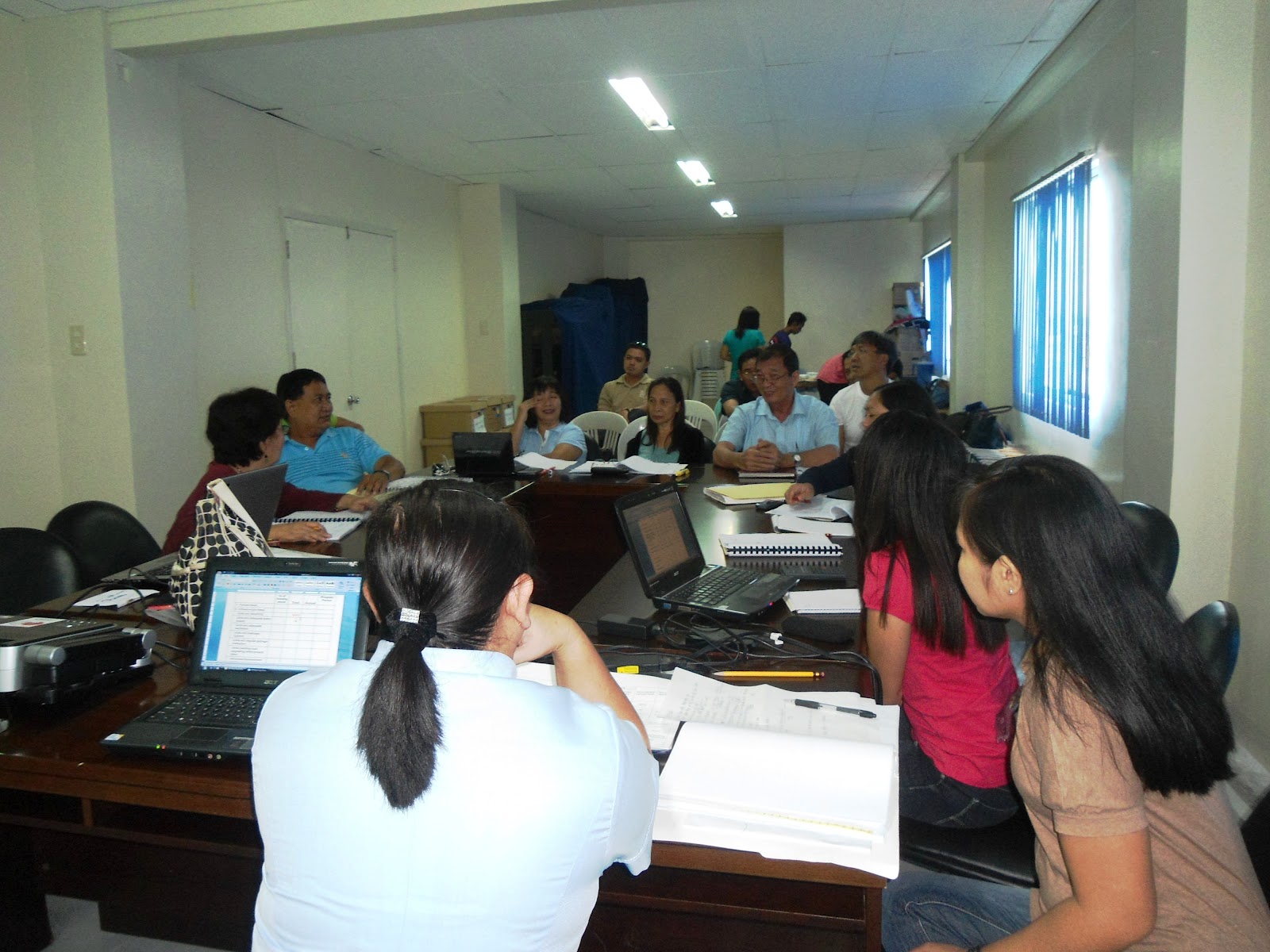 |
| Photo taken during the Workshop on Local Shelter Plan Formulation. Participants compose of representatives from LGU' City Planning and Development Office, Iloilo City Urban Poor Network, Housing and Urban Development Coordinating Council, Housing land Use and Regulatory Board and National Housing Authority. |
On the other hand, in Iloilo City, the Alliance’s recently promulgated membership and representation in the Local Committee against Squatting Syndicates and Professional Squatters, reaffirmation of its membership in the Local Housing Board, participation in the consultation meeting on the Comprehensive Land Use Plan of Iloilo City, its involvement in the formulation of the Local Shelter Plan for the same and its recent participation in the proposal to amend the a national legislation on Urban Development and Housing are tangible proofs that its constant and persistent initiative has not only made its presence undoubtedly visible but has to a great extent amplified its voice, loud enough not only to influence development policies but more importantly in taking the lead on setting the compass towards a more inclusive and participatory governance.
 |
| Lay-out and flooring of the housing units of the 3rd batch of housing participants |
Currently, the alliance is nearing completion of one hundred seventy two (172) housing units in its community-managed housing project in San Isidro Relocation Site in Iloilo City. Eighty three (83) of which were officially awarded to first and the second batch of housing participants while the construction of the 48 units for the third batch is still ongoing. The initial course of implementing the remaining forty one (41) units for the last batch of housing participants which considerably has the least affordability level will commence through Savings Orientation and Housing Design Workshop on Monday (April 16, 2012).
 |
| Housing units of the 2nd batch of housing participants. Because of a relatively lower capital fund of 110,000 pesos compared with the 150,000 pesos fund of the 1st batch they have decided to use ordinary GI sheets. |
The past few weeks have been quiet challenging and remarkably eventful for the Philippine Alliance particularly for the Iloilo Team, as exemplified by the abovementioned undertakings and activities. Such unfolding of events shows the Alliance’s potential to take greater leaps forward. However, “it is frustrating to know, see and encounter people who still think that they can just draw, plan, dictate, and build the house of the poor without getting them involved”, said Sonia Cadornigara, SDI Board Member. “We must keep in mind that we are not just building their houses but we are in a way building their lives and homes...and it is next to building communities...strategies which are in keeping with their progressive pace should be observed", she added.
Monday, November 21, 2011
Knowing What They Have and Expressing What They Want
 |
Marivic Mirasol, one of the housing participants from San Isidro Housing Project, facilitates the social mapping activity |
ILOILO CITY- Social preparatory activities such as Social Mapping and Dream House Workshop are among the capacity building activities supported by the Philippine Alliance to foster and promote community-led processes among partner communities in the country as a whole. New Baldoza Homeowners’ Association (NBHOA), one of the new community associations qualified to avail of the community-managed housing project implemented by the Philippine Alliance through the Community-led Infrastructure Finance Facility Program actively participated in the back to back training workshop facilitated by housing participants from Kabalaka and San Isidro housing project. The activity which was held last November 20, 2011 in Barangay Baldoza, Lapaz, Iloilo City, was attended by twenty (23) out of the twenty seven (27) applicants.
 |
| Members of the New Baldoza Homeowners' Association enthusiastically post the icons reflective of their socio-economic and demographic status |

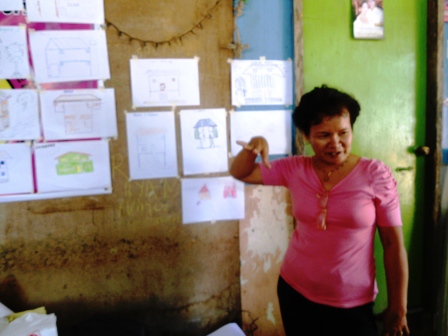
Dream house workshop on the other hand provides a venue for each participant to express their dream house through participative and illustrative schematic design making. Individual designs are then consolidated to integrate common spaces and essential design attributes by community architects and interns from the TAMPEI though three dimensional (3D) design models and prototypes. The following photos exemplify participants dream houses:


Despite budget limitation, particularly on the capital fund for the construction materials as well as the participants expressed preference on replicating the house designs in San Isidro Relocation Site in Jaro instead, the Alliance considers it imperative to conduct separate dream house workshop for New Baldoza as it would facilitate social acceptability and pave the way in building a sense of ownership among association members. As a response and in consideration of the people’s inherent adaptive capacity, the alliance encourages incremental development as a strategy to bridge the gap resulting from the aforementioned budget limitation.
The pictures below were taken during the presentation of the participants dream houses partcipants as they explain the reasons why they dream of such kind of houses:



For the past years, since the beginning of its housing initiatives in 2007, the Philippine Alliance has been consistent on its stand that social preparatory activities such as social mapping and dream house workshop are fundamental components of a cohesive and responsive community development undertaking. Building capacities among housing participants is likewise a leap forward towards a holistic community-led process.
Subscribe to:
Posts (Atom)